
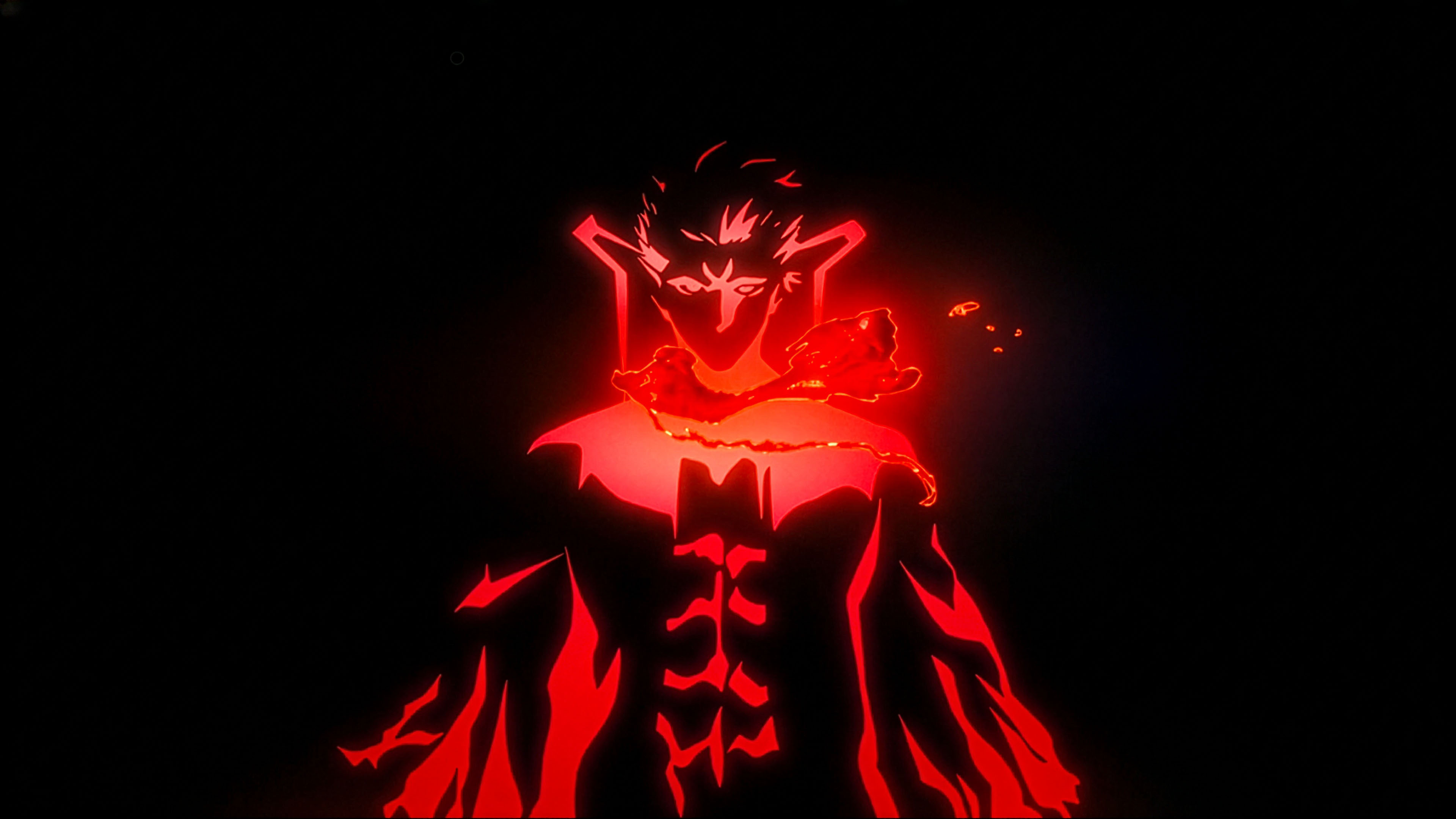
Warning: The following contains major spoilers for Bleach: Thousand-Year Blood War Part 4, Episode 5.
Another installment of Bleach: Thousand-Year Blood War is in the books, and with it, Tite Kubo’s legendary shonen franchise is one step closer to the perfect ending that it has long deserved.
Bleach: Thousand-Year Blood War Part 4, Episode 5 — officially Episode 45 of the final saga — debuted this past Saturday under the title “DEFEND YOU.” By the time its final sequence ends, however, that title has transformed into “LIFE TO DEFEND YOU.” The episode pits Ichigo Kurosaki against Yhwach in a fever-pitch battle that threatens to erase Soul Society, Hueco Mundo, and the World of the Living. However, while the Substitute Soul Reaper and King of the Quincy carry much of the action in Bleach‘s latest episode, it’s actually a different character who steals the show: Orihime Inoue.
Bleach: Thousand-Year Blood War Puts Orihime Front and Center in Latest Episode


Since her introduction at the start of Bleach, Orihime Inoue has often found herself playing the role of damsel in distress.
Ichigo Kurosaki’s kindhearted classmate spends the majority of the Arrancar Saga as a hostage in Hueco Mundo, and before that, she’s a well-intentioned but underpowered member of the group that invades Soul Society to rescue Rukia Kuchiki. Heading into Bleach‘s final saga, it was now or never for Orihime’s character development. Safe to say, Tite Kubo and Thousand-Year Blood War‘s staff rose to that challenge.
Orihime Inoue gets a phenomenal showing in Bleach: Thousand-Year Blood War Part 4, Episode 5, even if the episode isn’t going to pass the Bechdel Test anytime soon. Her tenacity in the face of Yhwach’s onslaught impresses even the villain himself, who watches her Shun Shun Rikka repeatedly reject injuries that should have killed her and Ichigo. But that’s far from the end of her story in this episode.
As someone who has watched and read Bleach since before the English dub first aired back in 2006, it’s been hard to see Orihime Inoue frequently being written into a corner where her options are (1) to heal her friends from the sidelines or (2) endure punishment as she awaits her savior, who is usually Ichigo. It’s an extremely unsatisfying loop for fans of her character. Even after Bleach established that Shun Shun Rikka rejects phenomena rather than merely healing injuries, Orihime’s compassionate nature and lack of reliable offensive firepower repeatedly relegated her to a supporting role.
Well, after apparently rejecting both herself and Yhwach from reality itself, Orihime can’t be called underpowered anymore.
With series director Tomohisa Taguchi handling the script, storyboard, and direction, Bleach: Thousand-Year Blood War‘s staff absolutely nails its expansion of Orihime Inoue’s stand against Yhwach, finally giving her the memorable showing that she deserved. Even though she almost certainly didn’t beat the King of the Quincy for good, her courage and willingness to sacrifice her life prove that she and Ichigo Kurosaki truly are birds of a feather — or, as she notes during the episode, flowers of the same petal.

The episode’s final imagery makes that connection explicit without forcing either character to say it aloud. Two flowers appear on screen: one remains standing while the other’s petals drift away. Then, only after Orihime’s apparent sacrifice, the title changes from “DEFEND YOU” to “LIFE TO DEFEND YOU.”
“LIFE TO DEFEND YOU” is brutal, visceral, and beautiful all at the same time, spawning the same sort of controlled chaos that Yhwach wants to unleash upon the Three Worlds. If Bleach: Thousand-Year Blood War can maintain this momentum throughout its final season, then Orihime Inoue and the rest of the cast may finally escape the shadow that once hung over Tite Kubo’s iconic franchise.
Bleach’s Final Saga Is Redefining the Big Three’s Legacy


Taking a step back, it’s incredible to see just how far Bleach has come since its original anime ended in 2012 without adapting the manga’s final arc. As a member of Shonen Jump’s Big Three, Bleach stood alongside anime giants like One Piece and Naruto during the mid-to-late 2000s, only to fall short of its contemporaries’ legacies as the dust settled in the 2010s.
Bleach‘s return in 2022 finally brought the Thousand-Year Blood War to television and gave Tite Kubo’s series a chance to redefine its legacy, but even its most ardent fans couldn’t have guessed how successfully Kubo and Studio Pierrot would rebuild the battle against Yhwach for the anime.
In terms of sheer animation, Bleach: Thousand-Year Blood War easily trumps anything the Naruto anime produced during its original run. From a writing perspective, it’s also telling a much cleaner final-war story than either Naruto‘s Fourth Great Ninja War or Boruto. While One Piece‘s recent uptick in production quality has been impressive, the Elbaph Arc still hasn’t consistently matched the visual spectacle of Bleach‘s final saga.
Overall, Bleach: Thousand-Year Blood War is finally giving Tite Kubo’s franchise an ending worthy of the Big Three, so how does this affect the group’s legacy?
On one hand, a rising tide lifts all ships. Bleach‘s long-awaited conclusion is fixing one of the biggest disappointments in the history of the Big Three, which is ultimately good for the entire shonen genre. On the other hand, Shonen Jump’s Big Three have also been used as a point of comparison — to each other, as well as to the new generations of shonen anime that have followed in their wake.
Now that Bleach and One Piece are both bringing their final sagas to life with some of the most impressive episodes of any shonen anime in recent memory, their ability to hold up against new-generation franchises like Demon Slayer and Jujutsu Kaisen suddenly gets much easier.
Can Ichigo Defy Fate and Save the Soul Society?


Orihime Inoue’s apparent sacrifice almost certainly isn’t enough to finish Yhwach for good. The King of the Quincy still hasn’t exhausted every advantage tied to the Sternritter fighting elsewhere, including Jugram Haschwalth and Gerard Valkyrie, making it even more likely he’s about to pull another ace from his sleeve.
When this inevitably happens, the same question will remain: can Ichigo Kurosaki save the day?
As the intersection of Hollow, human, Quincy, and Soul Reaper powers, Ichigo is the sole individual with the potential to go toe-to-toe with Yhwach. As the face of Bleach, he’s also the only individual who has been built up narratively to fill this role.
Episode 45 finally unveils Blood Chains Ichigo, a new form designed and named by Tite Kubo that channels his hybrid nature into one of Bleach‘s most imposing transformations yet. Unfortunately, even after combining Gran Rey Cero with Getsuga Tenshō, Ichigo still cannot overcome his opponent.
That may be where Orihime’s apparent sacrifice becomes important. Yhwach’s power allows him to perceive and alter potential futures, whereas Orihime’s ability rejects phenomena that have already occurred. The episode doesn’t confirm that her power can directly counter The Almighty, but deliberately placing those abilities against each other feels like more than a coincidence.
For 22 years, Bleach has repeatedly asked Ichigo to protect Orihime. “LIFE TO DEFEND YOU” finally lets her return the favor — and she may have created the first crack in Yhwach’s supposedly inevitable future.
Spare Thoughts on Bleach: Thousand-Year Blood War:
- The decision to only reveal the full title of the episode after Orihime Inoue sacrificed herself was a wonderful touch.
- Ichigo Kurosaki’s crescent moon eclipse imagery goes outrageously hard. Even Yhwach had to admire the aura for a moment
- Watching Rukia and Ichigo pair up one final time was awesome, and Yhwach’s comments regarding her significance felt well-placed.
- The fact that Uryu Ishida is surviving against Jugram Haschwalth while he wields The Balance and a share of The Almighty deserves major respect.
- If Renji Abarai doesn’t defeat these stone statues, then he may have one of the worst win-loss records in Soul Society history — Zabimaru’s whimper be damned.

Leave a Reply