
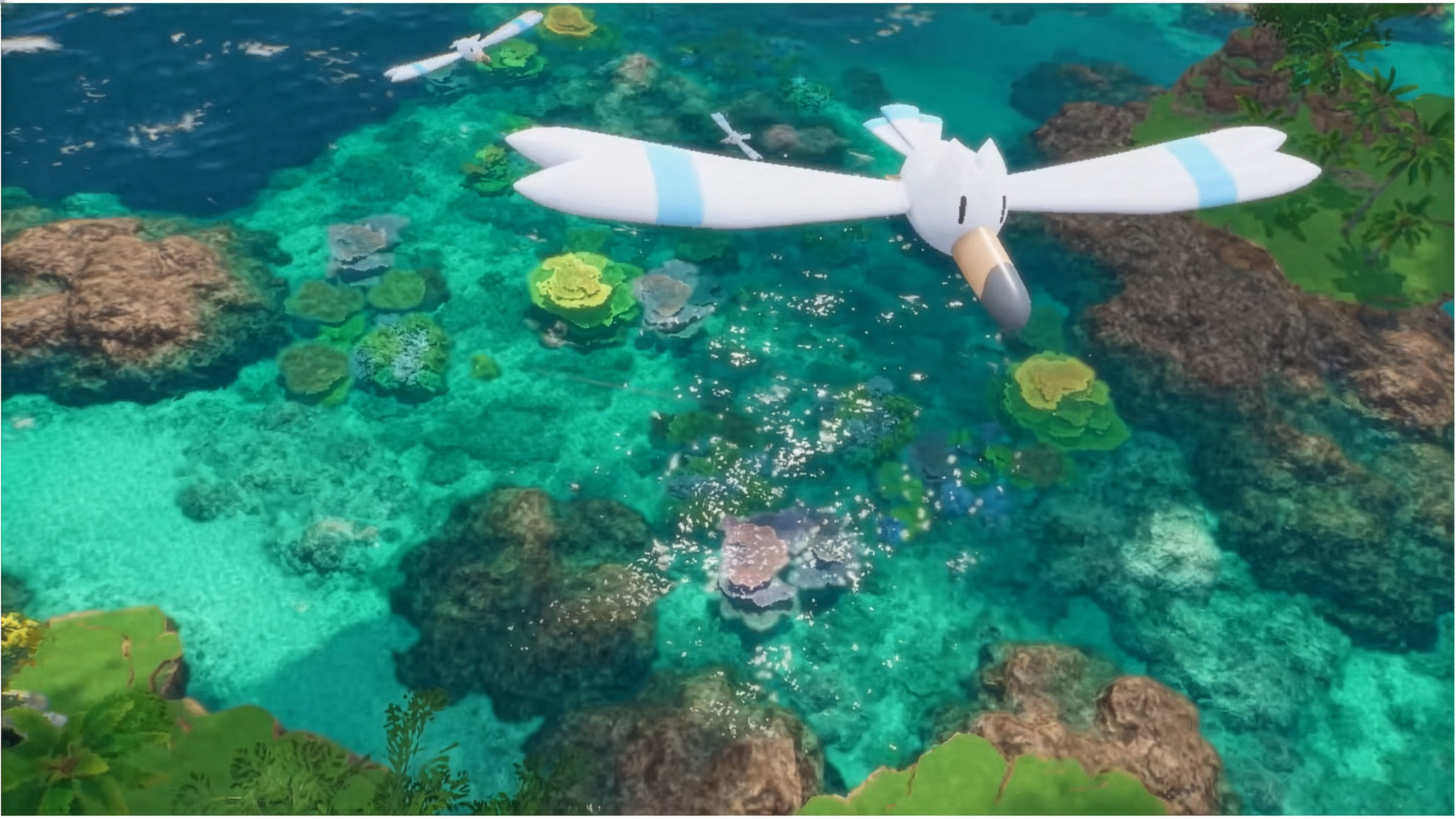
Gaming has changed a lot since the 2000s. As the decade that gave rise to high-definition 3D gaming and helped online multiplayer proliferate in the mainstream, 2000s gaming was an era of hope, technological advancement, and, of course, Pokémon. From the release of Pokémon Gold & Silver to the debut of Pokémon HeartGold & SoulSilver, the beloved franchise dominated the 2000s en route to becoming the highest-grossing media franchise of all time, as well as a staple in households around the world.
Now, the Pokémon franchise is attempting to recapture some of gaming’s 2000s-era magic. The franchise’s upcoming releases, Pokémon Winds & Waves, are the first installments in Pokémon‘s 10th generation, and while they seem set to showcase the Switch 2’s improved hardware, they also feature one of the 2000s best aesthetics: Frutiger Aero.
Gaming’s Frutiger Aero Was an Iconic Part of the 2000s


The history of the Frutiger Aero design style is, in many ways, inextricable from that of gaming, and in order to understand the former, it’s vital to understand what the turn of the millennium meant to gaming in general.
While video games consistently grew in popularity throughout the latter half of the 20th century, the end of the 1990s saw gaming take root in a major way. The original PlayStation (released in 1994) was a game-changer that introduced 3D gaming to millions, while Nintendo’s ongoing success with products like the SNES and the N64 continued to expose more and more fans to the idea of mainstream video game consoles.
By the time 2000 rolled around, gaming had firmly established itself as one of the preeminent forms of home entertainment in the world, setting the stage for the most explosive decade of growth in gaming history.
The early 2000s featured the release of the Nintendo GameCube, the PlayStation 2, and the original Xbox, all of which were landmark releases in their own right. Together, these consoles formed the backbone of a new era that captured the imagination of an entire generation thanks to their improved graphics and performance, paralleling the growth of technology in other realms like personal computers and cell phones.
This wave was a legitimate golden age for digital entertainment that gave 2000s gaming a hopeful tone, and as various studios took advantage of gaming consoles’ increased performance, a trend emerged: beach levels.
Super Mario Sunshine, Kingdom Hearts, Halo: Combat Evolved, & Sonic Adventure 2 are but a few high-profile releases from the early 2000s that feature prominent tropical beach levels, with games like Super Mario Sunshine even basing their core gameplay around aquatic elements. And, in retrospect, there was a very practical reason for this trend.
Early-2000s gaming consoles featured significantly better graphics than they did in earlier generations, and few things showcased this improved processing power more clearly than water. The wave physics, lighting improvements, and gorgeous textures of the GameCube, PlayStation 2, and Xbox brought gaming landscapes to life like never before, so it was only natural that the tropical beach aesthetic would become so popular.
Although the peak of the Frutiger Aero era is often stated to be from 2004-2013 (coinciding with the rise of Windows Vista), there’s a strong argument that its harmonious blend of the natural and digital worlds began in the gaming space. Now, decades after the fall of this unique era of technological design, one high-profile RPG release seems ready to usher the beach aesthetic back to the forefront.
Pokémon Winds and Waves’ Beach Aesthetic Hark Back to the Frutiger Aero Era


In 2026, the Frutiger Aero era and its association with gaming’s tropical beach trend feel like a distant memory. Thankfully, Pokémon‘s upcoming release — Pokémon Winds & Waves — looks like it may be reviving that era at exactly the right time.
Officially announced as Nintendo Switch 2 exclusives set for release in 2027, Pokémon Winds & Waves feature the exact type of setting that once defined gaming: an open world built around windswept islands and a vast ocean of glittering waves. Just as Super Mario Sunshine used Isle Delfino to show off the GameCube’s graphic performance, Pokémon Winds & Waves has the chance to show why the Switch 2 is more than just a souped-up version of the original Switch.
Of course, nostalgia and improved graphics alone won’t be enough to save the Pokémon franchise’s next major release. Pokémon games have been stagnant for years, so Pokémon Winds & Waves will face an uphill battle if it wants to sway the tide of public opinion. Thankfully, after years of debate over the technical state of modern Pokémon, returning to an open, water-heavy aesthetic might be exactly the kind of reset the series needs.
If the early 2000s taught the gaming community anything, it is how to use a new console generation to capture the imagination of gamers, and Pokémon Winds & Waves seems to understand that. By reaching back toward the optimism of gaming’s Frutiger Aero era, Generation 10 may have found the perfect way to make Pokémon feel new again.


Leave a Reply